
I ran exclusively on sidewalks, roads, and the occasional rail trail for the first 15 years or so of my running career. Even my high school cross country meets in the Midwest didn’t get any more technical than grassy fields (well, except for that one meet where they put out hay bales to make things more interesting, since the terrain sure wasn’t meeting the occasion on its own!).
Don’t get me wrong, I’ve had a lot of great experiences with road running. There’s nothing quite like the energy of a big city marathon. And I still complete about half my miles on the roads. But in 2017 I started trying out trail running at the encouragement of a friend. It was almost like starting an entirely new sport–except I didn’t realize it at first.
I made lots of mistakes, some of which led to easily preventable injuries that took me away from running for months. I don’t want that to happen to you! Now that I’m a little more seasoned on the trails, I’ve figured a few things out, and I absolutely love it. So to get you off on the right foot and help you fall in love with trail running, too, here are the first five tips, to keep you safe and coming back for more!
Tip #1: Take it slow.
If you’re transitioning from road running, don’t expect your pace on the trails to be anywhere close to your typical road running pace. In fact, as you’re getting started, don’t worry about your pace at all. If the trail you’re on has significant elevation change or any technical sections (e.g. rocks, roots, stream crossings, etc.), your pace is likely to vary quite a bit throughout your outing.
When I first started trail running, everything was great. I was flying down gullies and gallivanting across rocks. That is, until I tried to run quickly through a super rocky section and sprained my ankle badly.
Looking back, given my recklessness, it was only a matter of time until that was going to happen. I couldn’t run for almost three months–longer than I’d gone without running in my whole career. It was rough. But now I know that the signs at the ski resorts are true: “Play it safe, play all season.” It’s always better to slow down a tick (or two, or three, or to walk) through tricky spots so you can keep enjoying the trails again and again.
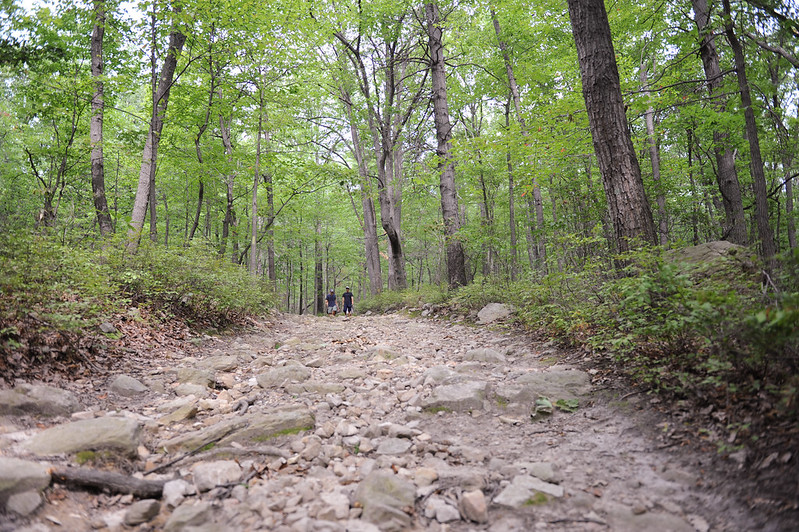
Tip #2: Focus. Focus. Focus.
Road running is great for zoning out, getting lost in your thoughts, and just cruising–but don’t try that on the trails. When I lose focus, I’m almost guaranteed to stumble. And if you want to enjoy the scenery for a moment (or, in my case, hear a bird you want to try to spot!), stop running! Since we’ve already established that pace doesn’t matter, stopping to look around for a moment (even to snap a picture) is always better than looking around while still running.
This might sound rigid and un-fun, but I find it’s actually somewhat like a moving meditation. You’re so focused on the task at hand that other worries (of which there are plenty for most of us) tend to fall away. The focus required for successful trail running forces you to be in the present. Embrace that opportunity!
Tip #3: Watch the weather.
Light: I don’t like to run anywhere in true darkness, but I often run on the roads well before the sun peeks above the horizon. However, because I need to be able to see my running surface more clearly, and because it takes brighter light to create good visibility in the forest, I never enter the trails before sunrise–ideally a little after.
Rain: Also, while I love a good road run in the rain, I don’t enter the trails during or immediately following heavy rainfall. Mud and high water crossings make technical trails more dangerous. Snow is another story, though–fresh snow is one of my favorite running surfaces (as long as its not too deep, and you can still see the outline of what might be underneath). And you definitely don’t want to be in the woods during thunder and lightning! (That’s a story for another post…)
Wind: I stay out of the woods during high winds. Trees and branches can fall unpredictably. If you’re just getting started on the trails, for best results (and to keep you wanting more!) I recommend sticking with dry and clear weather during a well-lit portion of the day.

Tip #4: Pack the essentials.
Even if you’re not heading out for several hours (yet – just wait til you get hooked like me!), it’s still important to be prepared in case anything goes wrong. As you advance in your trail running, you may find yourself in more remote areas, possibly miles from the nearest road. It’s important to be prepared. When I go for a trail run, I always bring:
- health insurance card and ID (I carry my driver’s license and also recommend a RoadID for all runners)
- a small amount of cash
- fully-charged cell phone
- toilet paper and hand sanitizer (come on, we’ve all been there)
- plenty of water and nutrition (my current go-tos are Tailwind and Huma gels)
If it’s going to be an extra long run, I also bring:
- mini med kit
- headlamp or flashlight (I love my mini Petzl headlamp, because it doesn’t bounce all over as I run and it’s super lightweight to carry)
- extra layer of clothing
- extra socks
- extra nutrition
Tip #5: Tell someone where you’re going.
It’s always a good idea to tell someone where you’re going, and approximately when you expect to be back, just in case something goes wrong. (This isn’t a bad idea for long road runs, too.)
If you take it slow, stay focused, watch the weather, and pack the essentials, you’re setting yourself up for a great experience–and I promise you’ll want to do it again. Now that you know the basics of how to keep yourself safe out there, next time I’ll talk about some ways to really embrace the spirit of the trail running experience. Til then, journey on, friends!
What would you add to this list of trail running safety tips?
Featured image by Rebecca Siegel, used under CC BY 2.0
 Nerdy Bird Running